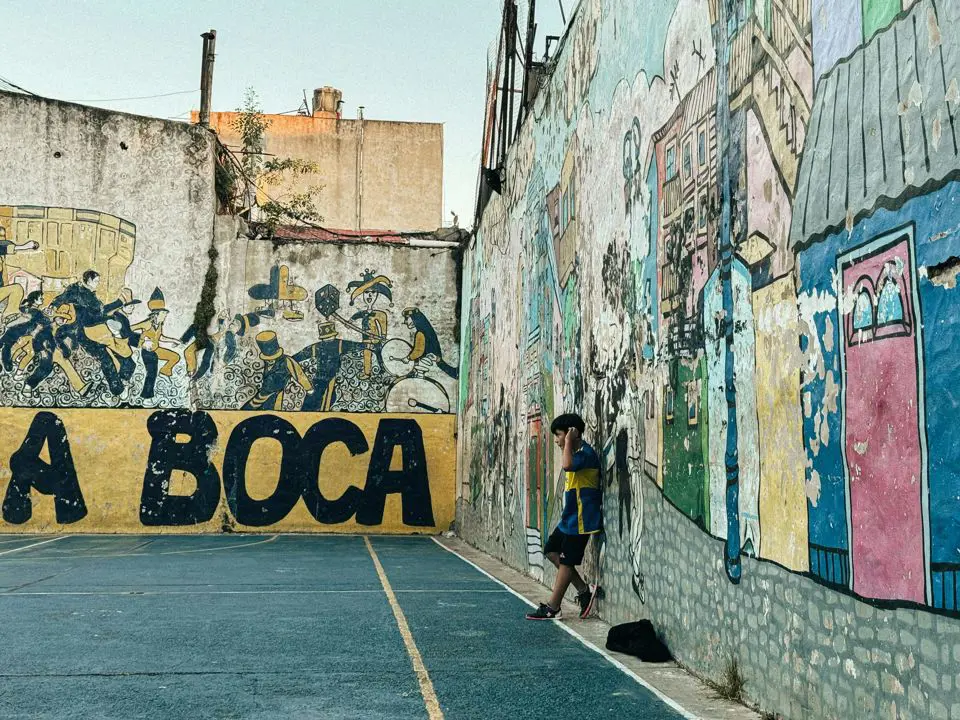
La Boca is one of Buenos Aires' most iconic neighborhoods. It's located at the southern edge of the city, at the mouth of the Riachuelo River. The identity of La Boca was forged in the late 19th century with the arrival of Genoese immigrants who settled in tenement houses made of corrugated iron and wood, painted with leftover paint from ships. The charm of these buildings still endures and attracts thousands of visitors every year.
The port and industrial past coexists with open-air art, tango, and a passion for football . If you're planning a trip and wondering what to do in La Boca , this guide details the main attractions, traditional dining options, and everything you need to explore the neighborhood safely and thoroughly. You'll find guided tour options, local recommendations, and routes through the most picturesque streets.
If your plan is to complement your visit to La Boca with the best of the city, check out our catalog of excursions and tours in Buenos Aires .
How to get to La Boca safely
The neighborhood is located almost 4 kilometers south of Plaza de Mayo . It's important to note that La Boca does not have any subway stations within its boundaries.
The best way to reach and explore the neighborhood safely with a specialized guide is the La Boca, Downtown, and Historic Neighborhoods Walking Tour . This guided walk connects the city's civic center with the southern neighborhoods , including transportation and historical activities among tenement houses and street murals.
First step in Caminito, La Boca: how to get there?
If you prefer to go without a tour or guided visit, the most recommended and direct option is to use ride-hailing apps (Uber, Cabify, or Didi) or taxis from downtown Buenos Aires. To get there by public transport, the most frequently used bus lines are 29, 64, and 152 , which cross the city and end their routes a few blocks from the tourist area.
Safety note : As in many outlying areas of large cities, La Boca has some unsafe zones. The tourist circuit encompassing Caminito, the Riachuelo riverbank, and the area around the stadium is patrolled by the Tourist Police and is completely safe during the day. However, it is strongly advised against straying from these designated streets or walking around the neighborhood after dark.
What is there to do in La Boca?
The charm of La Boca lies in its rich cultural heritage, its museums, and its port legacy. The classic tour begins at Vuelta de Rocha , overlooking the Riachuelo River. This waterway was the economic engine of the neighborhood for decades.
Dominating the landscape is the Nicolás Avellaneda Transporter Bridge , an imposing iron structure inaugurated in 1914 to transport pedestrians and carriages to the province of Buenos Aires. It is one of only eight such bridges remaining in the world and a symbol of Argentina's industrial history.
For those who wish to see the neighborhood from the water, the river excursion from Puerto Madero to La Boca offers a unique perspective. The boat tour departs from the docks of Puerto Madero and sails south to the mouth of the Riachuelo River . This trip is perfect for appreciating the contrast between the financial district and the old port with its corrugated iron and colorful buildings.
Benito Quinquela Martín Museum and Caminito
Just a few meters from the bridge is the Benito Quinquela Martín Museum (Avenida Pedro de Mendoza 1835). Quinquela is the neighborhood's most representative visual artist; he dedicated his life to painting the harsh realities of dock work using palette knives and saturated colors. The museum is housed in the building he donated to the neighborhood and displays his personal collection. It also features accessible terraces offering the best panoramic views of the riverfront.
Upon leaving the museum, you enter Caminito, the city's most famous open-air museum . This 150-meter-long pedestrian walkway follows the route of an old, abandoned railway branch line. In 1959, thanks to the initiative of Quinquela Martín, the facades of the adjacent tenement houses were painted in vibrant colors, and the path was filled with sculptures and reliefs . Today, Caminito is a hub for local artists, couples dancing tango for tips, and tourists photographing the corrugated iron balconies.
usina del arte
About ten blocks from the main tourist circuit, on Avenida Pedro de Mendoza and Caffarena , lies the Usina del Arte . This Florentine Neo-Renaissance style building functioned as an electricity generating plant in the early 20th century. Today, it is fully restored and operates as a top-tier cultural center, with acoustically designed halls for symphonic concerts and industrial spaces hosting contemporary art exhibitions.
Is it possible to visit Boca's stadium?
The answer is yes. Tourist access is through the Boca Juniors Museum, located at 805 Brandsen Street , right under the stadium stands. Getting to Boca's stadium from Caminito is simple: it's just a four-block walk along Dr. del Valle Iberlucea Street or Garibaldi Street. This route is lined with urban football murals dedicated to idols like Diego Maradona and Juan Román Riquelme .
The neighborhood's identity is inextricably linked to Club Atlético Boca Juniors and La Bombonera, the stadium considered a temple of international football. The museum displays trophies, historic jerseys, and a 360° immersive space that simulates the experience of stepping onto the pitch .
If your plan is to combine football with the bohemian atmosphere of La Boca, the Tango and Football in La Boca tour offers a perfect itinerary. The tour begins at the Carlos Gardel Museum in Abasto and includes a visit to the Boca Juniors stadium with a stroll through the cobblestone streets and the Tango Corners.
For football fans seeking a complete immersion, the Monumental and Bombonera Stadium Tour is the ideal choice . This half-day excursion includes transportation and entrance tickets to Argentina's two most important sports museums . The tour offers a unique contrast between the acoustics and history of La Bombonera in the south and the imposing grandeur of River Plate's stadium in the north of the city.
What days can you visit Boca's stadium?
The museum is open daily from 10:00 AM to 6:00 PM , except on official home match days, when it closes for security reasons and police operations. The "Stadium Tour" option, which allows access to the stands and internal corridors, depends on club availability and field maintenance.
How to get tickets to see Boca at La Bombonera?
A visit to La Bombonera and La Boca allows you to understand the passion that unites the neighborhood with the club. However, the experience isn't complete without entering the stadium to cheer on Boca Juniors in an official Argentine football match. Ticket sales are exclusive to club members and authorized operators, but there's another option: buying tickets to see Boca with Futboltours , which guarantees official access and the best price for the most exciting matches.
Gastronomy: where to eat in La Boca
At lunchtime, La Boca comes alive with a celebration of its Italian and Buenos Aires culinary heritage. In the immediate vicinity of Caminito (Magallanes and Del Valle Iberlucea streets), tourist menus abound, featuring barbecues accompanied by live tango shows . These are convenient options for staying within the main tourist area.
If you're looking for a quick and tasty meal to accompany your stroll along the riverfront, the classic choice is to stop at Paseo La Boca Resto Bar Sandwich. Here, tradition dictates ordering a choripán (a grilled chorizo sandwich smothered in chimichurri sauce), a must-try on any Buenos Aires street food menu.
However, for an authentic culinary experience, the recommendation is to seek out the traditional restaurants (bodegones) in La Boca . One of the most emblematic is El Obrero (located at Agustín R. Caffarena 64). This historic restaurant is famous for its generous portions of calamari, homemade pasta, and its specialty: the bife de chorizo (ribeye steak), a favorite haunt for decades of artists and soccer players .
Another gastronomic institution in the neighborhood is Banchero pizzeria (Av. Almirante Brown 1200). Founded in 1932 by Genoese immigrant Juan Banchero, it is recognized as the creator of fugazza con queso, a thick pizza topped with onions and cuartirolo cheese.
Published by Has Chacon on 19/06/2026