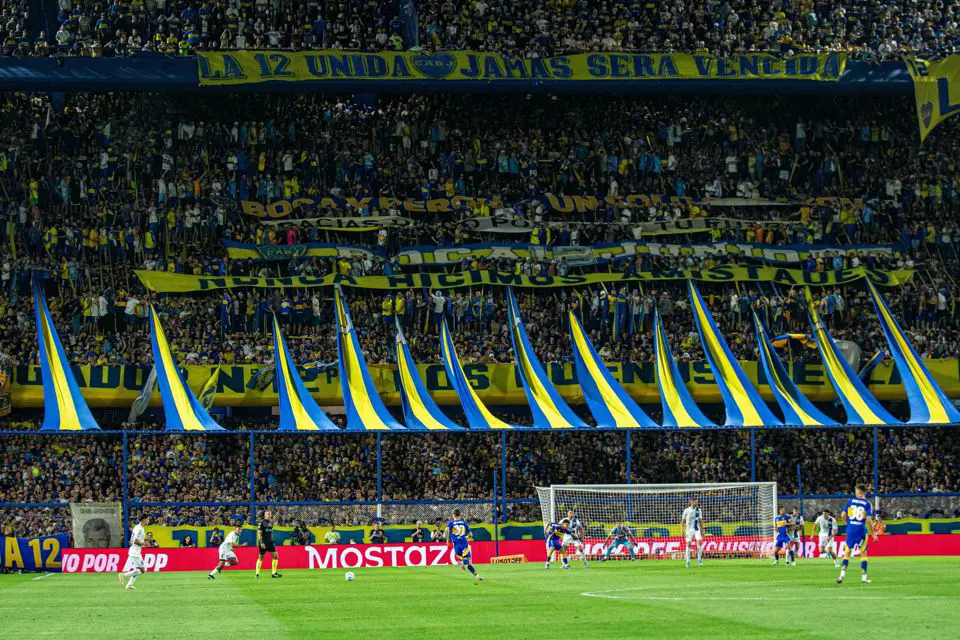
Many football enthusiasts arrive in the country with a clear goal in mind: to visit the iconic grounds of Boca Juniors and River Plate, the most important Argentine clubs. The "Monumental" stadium is located in the porteño neighborhood of Núñez, while "La Bombonera" is found, as its name suggests, in La Boca. Is it possible to visit them on the same day?
There are only approximately 16 kilometers (10 miles) between one ground and the other, so it is indeed possible to see both the Boca Juniors and River Plate stadiums in a single day. But besides being an option, it is almost a mandatory task: the history uniting these iconic sports establishments is so vast and interesting that sticking to just one version would be an injustice (and taking sides prematurely!).
The passion unleashed by Boca and River in their fans (hinchas), in every "Superclásico," and in every neighborhood, is incomparable anywhere else. Both are breeding grounds for enormous football figures and head coaches who went on to lead foreign teams to glory. Moreover, the club fulfills a huge social function in Argentina: it is a meeting point, a place of identity, and commitment to the environment beyond the sport. That is why, even if one does not wear the colors, one can come to identify with the feeling promoted by both stadiums.
Since we don't want you to miss any experience, we leave you with a guide containing the most important details of both clubs and an exceptional recommendation to make that dream come true easily, quickly, and comfortably.
La Bombonera: Popular Origin and Unique Mystique
The Boca Juniors stadium was inaugurated on May 25, 1940, and its official name is Estadio Alberto J. Armando, in tribute to one of the most important leaders in the club's history. However, for fans and visitors, it is simply La Bombonera, a nickname alluding to its "chocolate box" shape.
From its origins, the stadium was conditioned by the reduced dimensions of the available land, which determined its vertical structure and the extreme proximity between the stands and the playing field. That technical limitation transformed over time into one of its greatest virtues: the sensation of sound and visual pressure experienced inside the stadium is considered one of the most intense in the world.
The blue and gold ground is more than that: it is a cultural phenomenon. Its murals, its corridors, the museum, the direct relationship with the neighborhood streets, and the Xeneize identity convert every visit into an urban and emotional experience. There is no possible neutrality: even visitors who are not fans acknowledge that something different happens there.
Idols and Coaches Who Made History at Boca Juniors
Talking about La Bombonera implies remembering those who made it vibrate. Among them, Juan Román Riquelme occupies a central place. Another name inseparable from the stadium is Martín Palermo, the club's all-time top scorer and protagonist of decisive goals in national and international finals. Carlos Tévez also left his mark, emerging from the club and marked by a personal story that connected directly with Boca's popular identity. And although it was for a brief period, Diego Armando Maradona, the world football star, also stood out at this club.
El Monumental: The Idea of Greatness Made Stadium
The Estadio Monumental was inaugurated in 1938 and bears the name of Antonio Vespucio Liberti, president of River Plate during the period its construction was promoted. From its origin, the project was driven by a clear ambition: to create the largest and most modern stadium in the country.
Located in the Núñez neighborhood, El Monumental grew and transformed over the decades to become the stadium with the highest capacity in Argentina. In addition to being the home of River Plate, it was for years the main stage for the Argentina National Team and the venue for world-class sporting and cultural events.
El Monumental represents a different conception of football: spaciousness, panoramic vision, institutional organization, and national centrality. Historic finals, decisive World Cup matches, and concerts etched in collective memory were played there.
Emblematic Figures of River Plate and El Monumental
In the history of River Plate and its stadium, names appear that defined eras. Enzo Francescoli is one of the top references: the Uruguayan "Prince" captivated fans with his elegance and talent, leading the team to conquer the 1996 Copa Libertadores and five local championships. Another reference is Marcelo Gallardo, the winningest head coach in River's history: under his leadership, the club won two editions of the Copa Libertadores, among other achievements.
How to Tour La Bombonera and El Monumental in a Single Day
Visiting both stadiums in the same day is possible and increasingly chosen by those visiting Buenos Aires with little time available. There is an organized experience that allows doing it efficiently: the Bombonera and El Monumental tour offered by Best Buenos Aires Tours.
The tour includes entry to the River Plate Museum and Stadium, the visit to the Museo de la Pasión Boquense, and the transfer between both points with a specialized guide. This allows optimizing times, avoiding complex transport combinations, and accessing contextualized historical information that enriches the experience.
Doing both tours independently implies coordinating long transfers within the city, buying tickets separately, and dispensing with a comprehensive explanation. The combined tour appears as a practical solution for those seeking efficiency without giving up content.
In addition to saving time, this type of experience allows unifying transfer, access, and guide costs, making it especially convenient for tourists and also for residents who want to rediscover these spaces from a historical and cultural perspective.
La Bombonera and El Monumental are not just sports venues: they are part of the Argentine cultural DNA. Touring them is understanding how football shapes identities, disputes, and affections in Buenos Aires. Doing it in a single day, in an organized and contextualized way, allows access to one of the most intense experiences the city has to offer.
Whether for football passion, cultural interest, or urban curiosity, knowing these two stadiums is an essential visit. Because in Argentina, understanding football is also understanding its history, its people, and their unique way of living collective emotions.
Published by Has Chacon on 23/06/2026