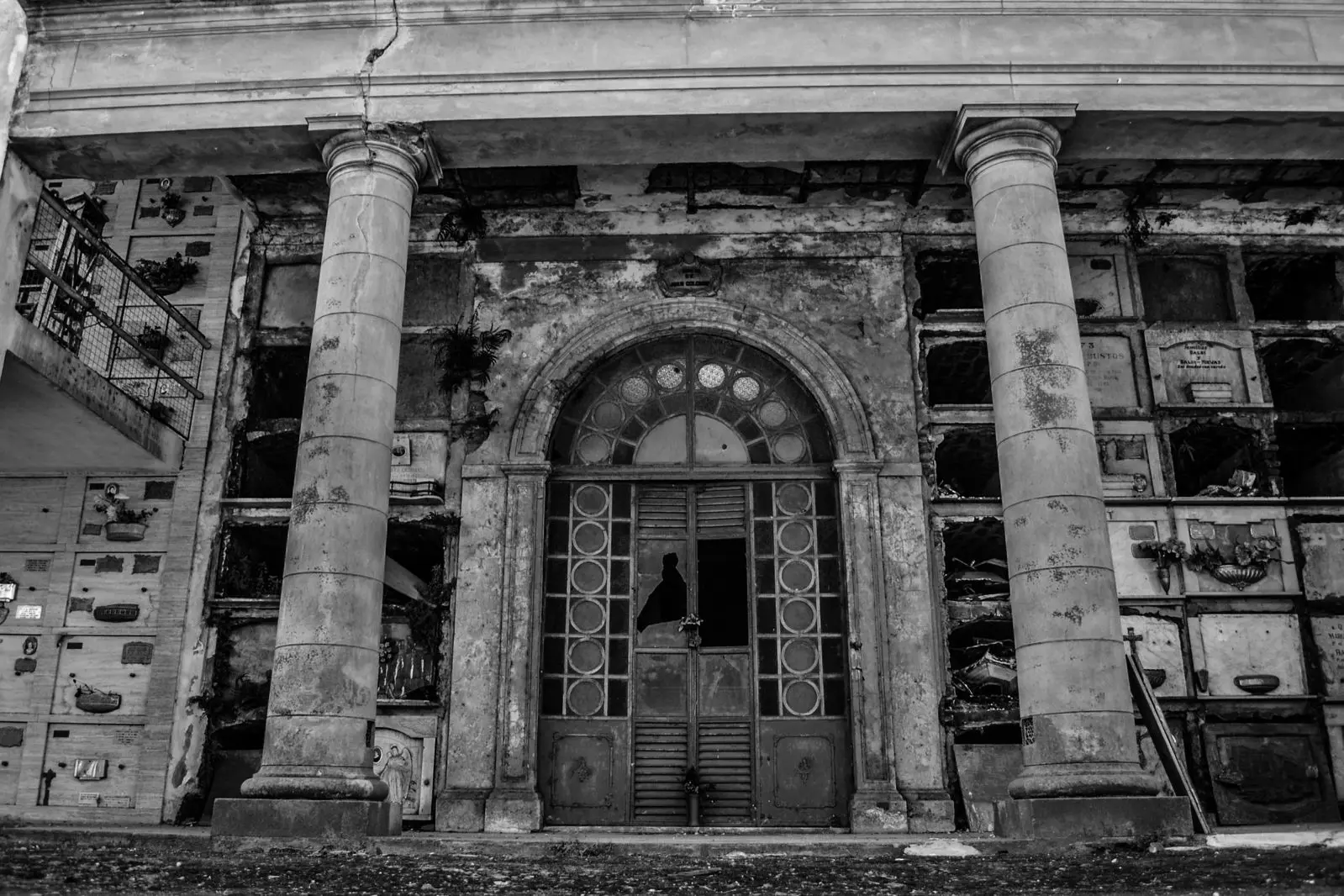
Buenos Aires' European-influenced architecture, tango, and culinary scene are world-renowned. However, behind the facades of its neighborhoods, the Argentine capital and its surrounding metropolitan area conceal tragic histories, networks of colonial tunnels, and hidden sites not found in traditional guidebooks. Themed tours in Buenos Aires offer an in-depth look at these secrets.
These excursions depart from the classic tour to focus on specific narratives: from Freemasonry in the old town and the exploration of Jesuit tunnels, to visiting closed-door bars inspired by local legends.
In this article, you'll find the best tours and excursions near Buenos Aires , as well as urban circuits that reveal the city's hidden side. We'll explore options for a nighttime tour of mysterious Buenos Aires, uncover the hidden stories of prominent figures from the city, and revisit the settings of its most famous urban legends.
A circuit of tunnels, crimes and urban legends
The history of Buenos Aires is marked by epidemics, underground defensive structures, and tragedies that gave rise to numerous popular legends. The best way to explore these stories is to wander through the southern neighborhoods and the historic center, where period architecture serves as the main backdrop.
Let's see what stories are hidden in these streets.

Mysterious Buenos Aires Tour: Saint Felicitas and Freemasonry
One of the more unusual tours is the Mysterious Buenos Aires tour , which focuses on the dark tales of the historic center and the southern part of the city . The itinerary includes stops at emblematic sites such as the Santa Felicitas Museum , located at 1480 Pinzón Street in the Barracas neighborhood.
This church was built by the Guerrero family in memory of Felicitas, a young widow murdered in 1872 by a rejected suitor. Urban legend says that her figure, dressed in white, wanders through the church every January 30th .
Beyond the myth, the site retains its heritage value. Currently, guided daytime tours are offered between 3:00 and 5:00 PM, covering the Tunnel Museum and the Hidden Temple. Another option for nighttime tours is "History Fiction," which combines historical narrative with theatrical performances and a tasting of period liquors .
Another essential stop for exploring the mysteries of Buenos Aires on a tour is the Barolo Palace, at Avenida de Mayo 1370. This building, inaugurated in 1923, was designed according to strict mathematical proportions and Masonic references, emulating the structure of Dante Alighieri's "Divine Comedy." After exploring the hidden symbolism in its vaults, the visit culminates at the lighthouse located in the dome, 100 meters high.
Colonial tunnels in the Church of San Ignacio de Loyola
The Church of San Ignacio de Loyola houses a network of 18th-century Jesuit tunnels in the Monserrat neighborhood , at 225 Bolívar Street. Although historians agree that their construction served defensive and logistical purposes to connect the order's buildings, there are no official written records from the Spanish crown documenting their exact use.
Guided tours allow visitors to explore a restored 35-meter underground section. The tour concludes with a climb to the upper levels and the south tower of the temple . From there, a panoramic view of the historic center unfolds, creating a visual map between the colonial grid and the modern city.
Zanjón de Granados: I discovered the underground tunnels of San Telmo
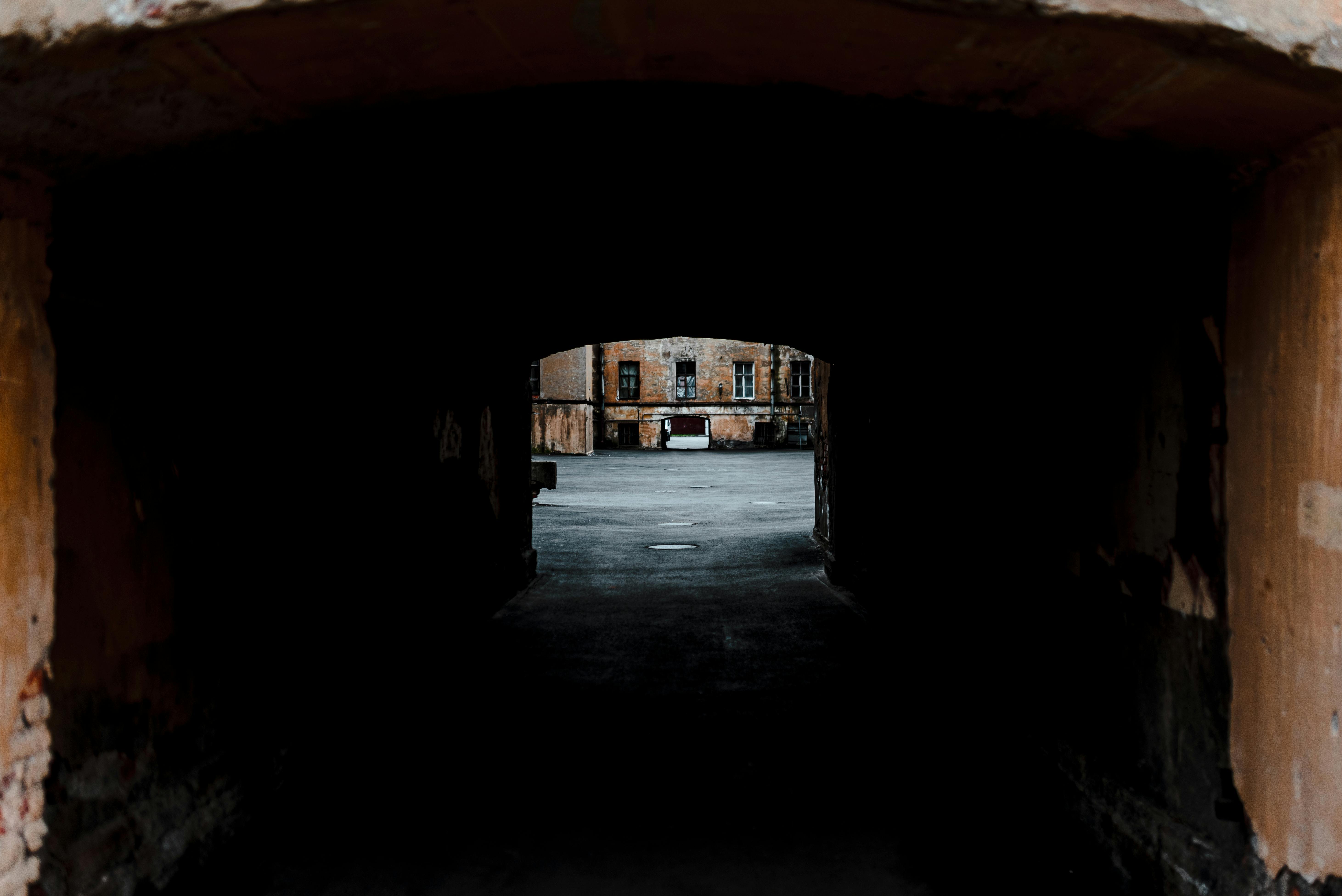
Today, the Zanjón de Granados functions as an archaeological museum. Its restoration took 38 years to recover living fragments of the capital's urban and social evolution. Original quebracho wood roofs, adobe floors, cisterns, and water tanks lined with French tiles were repaired. The latter stored rainwater, and, remarkably, families used to raise sea turtles inside them to purify it.
This historic passageway is located at the corner of Defensa and San Lorenzo streets, in the heart of San Telmo. Hidden within it is one of Buenos Aires' oldest underground systems. It is believed that its tunnels once connected Plaza de Mayo and other key locations in the city via underground passages.
The discovery of these tunnels in San Telmo began in 1985 when the buyer of the abandoned property started his project to open a restaurant. Under layers of rubble and garbage were the remains of a house dating back to 1830. Further down, the storm drain system was revealed.
The investigation of the ruins revealed that the house belonged to the Miguens family , of Spanish origin. It had 23 rooms, a kitchen, two bathrooms, and three courtyards: one for reception, another for the family, and a third for the servants.
Beneath the mansion, 18th-century arches were found, suggesting a previous structure existed. The discovery of tunnels over three meters high , with brick walls weathered by water, indicated that the storm drains had been built by the residents themselves to control flooding.
According to urban planning research, the house was abandoned around 1860 , possibly due to the yellow fever epidemic. After the epidemic, the streams were channeled underground, and in 1892, with the installation of running water, the tunnels became obsolete. Some residents used them as basements, while others filled them in.
At the beginning of the 20th century, the building was adapted for new uses. Shops operated on the ground floor, while the first floor became a tenement that housed about thirty immigrant families.
History and politics: the cultural legacy of Buenos Aires
Beyond the mystery and legends, Buenos Aires' identity is forged by political and literary figures who left their mark on the city's neighborhoods . Exploring these legacies through guided tours allows one to understand the complexity of 20th-century Argentine culture.
The Buenos Aires of Evita Perón and Jorge Luis Borges
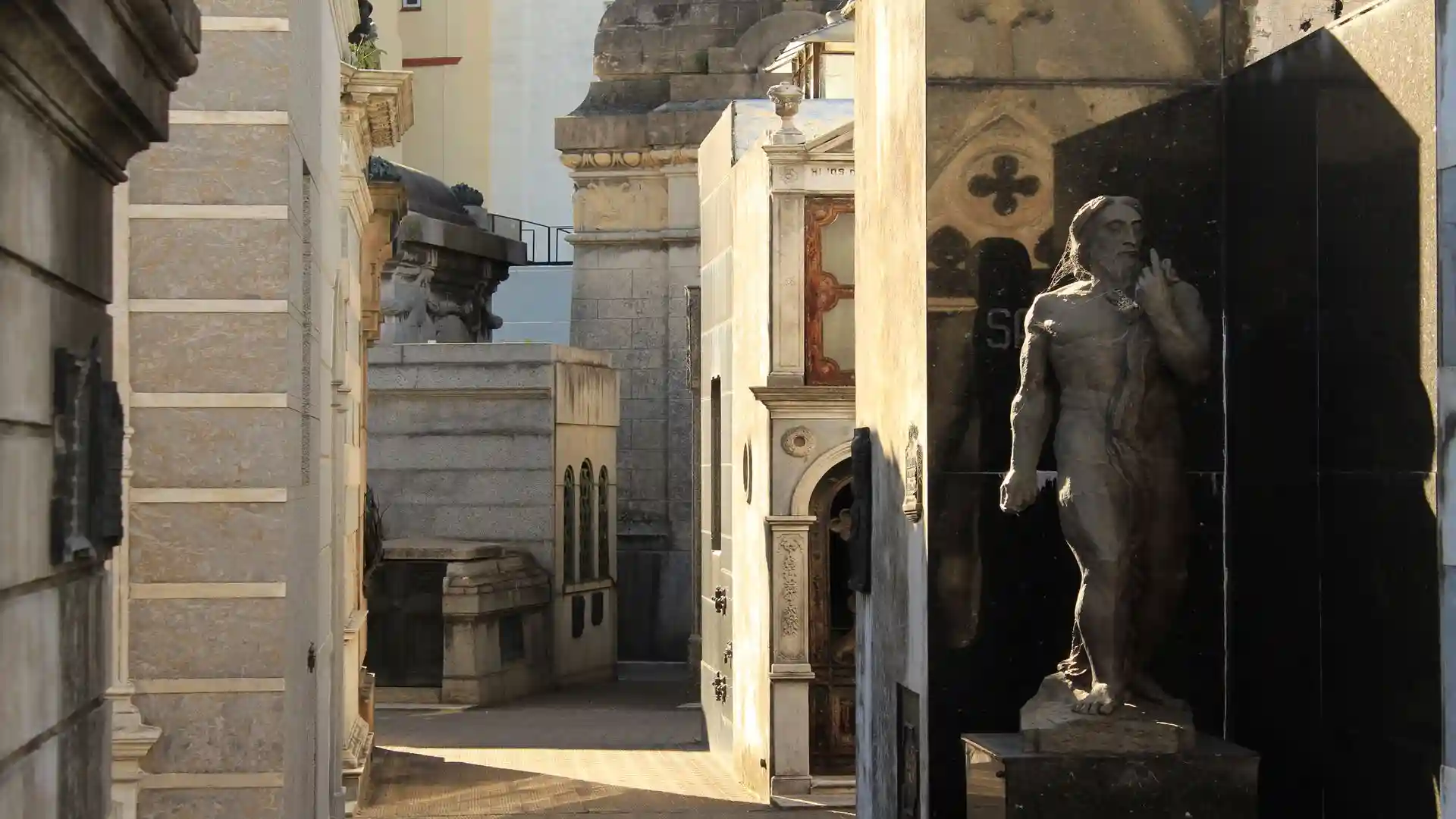
The tour : The Buenos Aires of Evita Perón and Jorge Luis Borges It proposes a three-hour tour that contrasts the lives of two of the country's most influential figures. The first part of the tour focuses on María Eva Duarte de Perón. The tour includes a visit to the Evita Museum in Palermo and culminates at the Recoleta Cemetery , where the guides detail the complex historical journey her embalmed body underwent before being laid to rest in the family vault.
The second stage focuses on the writer Jorge Luis Borges. The itinerary takes you through the Palermo Viejo neighborhood, exploring cobblestone streets, such as the current Jorge Luis Borges Street, which inspired many of his fantastic stories. The tour includes stops at the old libraries and cafes frequented by the author.
Jewish Tour: Jewish Life in the Río de la Plata
The Jewish Tour: Jewish Life in the Río de la Plata offers an in-depth exploration of the legacy of this community. The four-hour tour begins in Retiro, visiting the Plaza de la Memoria (Memory Plaza), the site of the former Israeli Embassy until the 1992 bombing.
The itinerary continues to the Temple of Liberty , the oldest synagogue in the country, inaugurated in 1932. Afterwards, the Balvanera neighborhood is visited to see the reconstructed AMIA headquarters and the Great Paso Temple , completing a comprehensive view of the integration of the community in Argentina.
Hidden gastronomy and themed nightlife spaces
The narrative of mystery extends to the city's culinary and entertainment offerings as well. In various neighborhoods, establishments operating behind closed doors or in restored historic buildings offer experiences that combine cocktails, shows, and aesthetics linked to local legends.
Albur and theatrical restoration
Located at 435 Avenida Callao, on the border between the Balvanera and Recoleta neighborhoods, Albur operates as a restaurant and concert venue. The space occupies the former "El 35" theater, an epicenter of the alternative arts scene in the 1920s.
After being found in a state of disrepair, the venue was restored in 2013, preserving its French marble, checkerboard floors, and original Slavonian oak scissor lift . The space has regained its acoustics and offers tango, jazz, and bossa nova shows on weekends. It is open Monday through Saturday for lunch and dinner.
Secret bars: Purgatory and Luzmala Bar
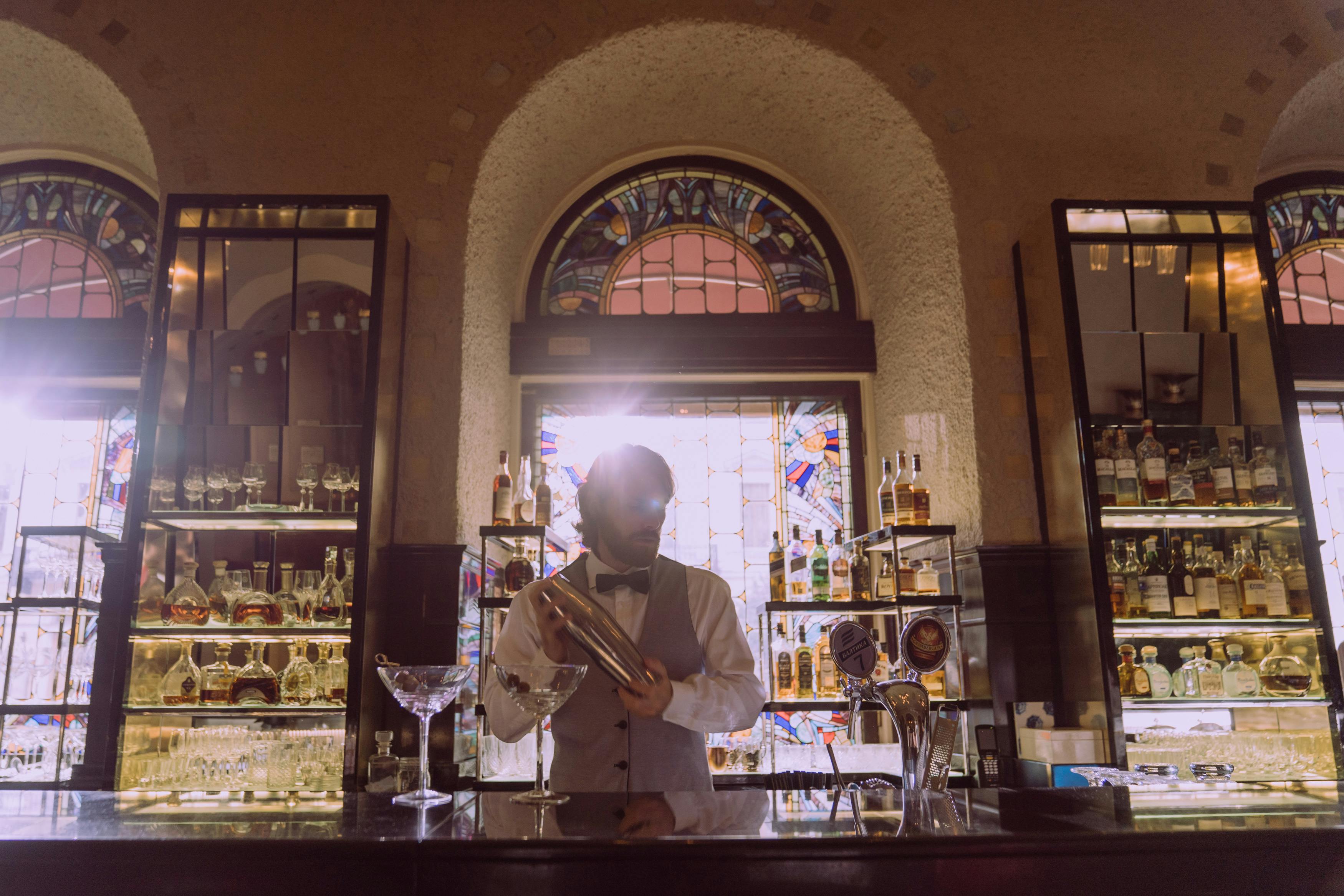
Purgatorio operates by reservation only in the Palermo Soho neighborhood. Access to the establishment is hidden behind a walk-in refrigerator door , and entry requires reciting an access code obtained from their website.
Inside, the dim lighting and Gothic-style furnishings are complemented by a themed cocktail menu and tableside tarot readings. This makes it one of the most popular spots during Halloween celebrations.
Luzmala Bar, for its part, bases its concept on the rural legend of the "evil light" (luz mala), a phosphorescent phenomenon associated with supernatural presences . It features an outdoor patio for mild evenings and maintains a Victorian aesthetic. Its offerings are distinguished by the interactive presentation of its cocktails, incorporating theatrical elements and live music . It is located at Arcos 2950, in the Núñez neighborhood.
Movie-like settings in the Buenos Aires suburbs
If you're looking for outings near Buenos Aires that offer a stark contrast to the city's architecture, you need to venture beyond the limits of the capital. In the Greater Buenos Aires area, there are properties that defy architectural and temporal logic.
Campanópolis: the ecological medieval village
Campanópolis is located 35 kilometers from downtown Buenos Aires, in the town of González Catán. It can be reached in 45 minutes via the Riccheri Highway and National Route 3.
This complex was built starting in 1976 by businessman Antonio Campana. Inspired by European architecture, he constructed a 200-hectare medieval village using exclusively demolition and recycled materials , repurposing cobblestones, railings, and columns from old buildings in Buenos Aires. The result is a landscape composed of castles, cobblestone streets, and themed museums.
The Campanópolis: Medieval Village tour is ideal for visiting this complex without having to deal with public transportation to the suburbs. The package includes round-trip transportation from downtown Buenos Aires, entrance to the site, and a two-hour guided tour . During the tour, you'll learn about the founder's history, the bio-construction techniques used, and have free time to photograph the buildings and the natural surroundings along the Matanza River.
Published by Has Chacon on 12/06/2026