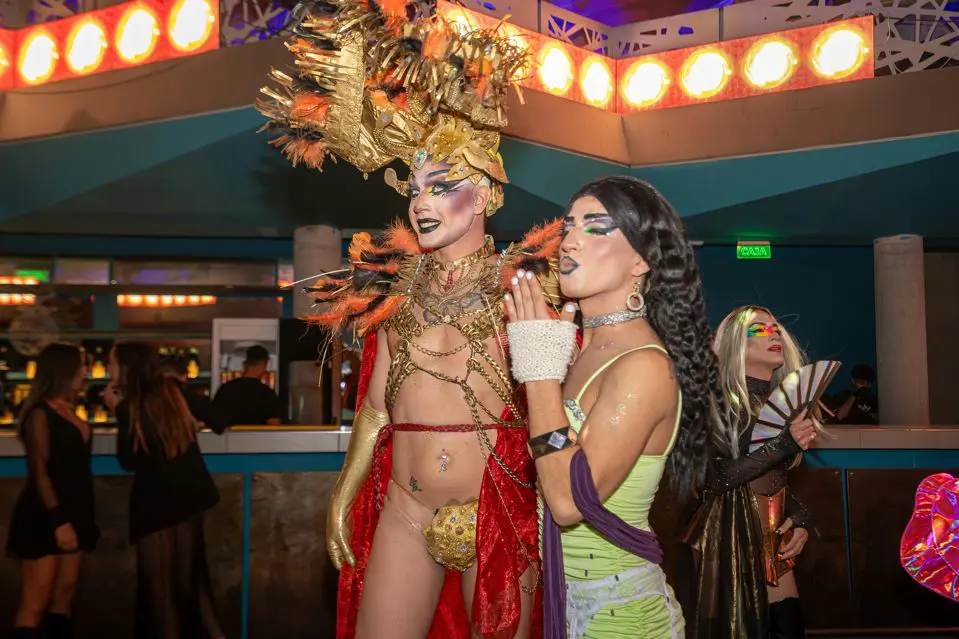
The Autonomous City of Buenos Aires is one of the most popular metropolises among the international community due to its public policies and diverse entertainment offerings. In this article, we propose the best LGBT venues in Buenos Aires: from self-managed cultural spaces to the historic nightclubs that shaped the community's nightlife in the country .
To understand the gay scene in Buenos Aires, you have to forget about the urban geography. Unlike other global capitals, Buenos Aires doesn't have a clearly defined "gay neighborhood" like the Castro in San Francisco or Chueca in Madrid . Therefore, the LGBT bars and nightclubs in Buenos Aires are spread throughout the city, but are mainly concentrated in the neighborhoods of San Telmo, Recoleta (Barrio Norte), and Palermo .
In this article, you'll find addresses, the type of crowd they attract, and the musical offerings of the top gay clubs in Buenos Aires. You 'll also find answers to frequently asked questions about where to go out on weekends, which historic establishments are still operating, and how to plan your night out in the tango capital. And if you're looking for more things to do in the capital, don't leave without checking out these tours and excursions in Buenos Aires .
LGBT bars in Buenos Aires: the Barrio Norte and Recoleta circuit
The Recoleta neighborhood was the historical epicenter of LGBT nightlife in the 1980s and 1990s , specifically in the area known as "Barrio Norte," around the intersection of Santa Fe and Pueyrredón avenues. Today, several venues remain open in this area, offering options for drinks before heading out to dance.
Zoom and Contramano: the classics
Zoom, a gay bar in Buenos Aires, is a traditional meeting place located at 1018 Uriburu Street. It primarily functions as a pre-party bar and attracts a mostly male clientele. People arrive between 10:00 PM and 2:00 AM to enjoy beer or cocktails in a relaxed atmosphere before heading to nearby nightclubs.
Just a few blocks away, at 1082 Rodríguez Peña Street, you'll find Contramano. This gay bar in Buenos Aires has been operating since 1984 as a small bar with a dance floor, and its aesthetic remains true to its origins. Its clientele is mostly adults, over 35 years old. Its proximity to Avenida Santa Fe makes it easily accessible via subway line D (Callao Station) .
Km Zero gay disco in Buenos Aires and other historic ones
In the same Barrio Norte neighborhood, at 1944 Marcelo T. de Alvear Street, you'll find Loka Km Zero . This establishment operates as an after-hours bar and is one of the few places in the area that stays open until dawn. It's known for its drag queen and transvestite shows on weekends .
Other establishments that left their mark on the area's history include Bunker Disco and Angel Disco. Although they closed their doors in the early 2000s, their legacy lives on in Recoleta's nightlife.
Palermo and San Telmo: cultural bars and queer tango
As the city expanded, the supply of LGBT venues in Buenos Aires diversified into other neighborhoods, incorporating offerings that go beyond the traditional dance floor.
Gay bars in Palermo: Feliza and Casa Brandon
The Palermo neighborhood boasts the highest concentration of queer cultural spaces. Located at 3271 Avenida Córdoba is Feliza , a social and cultural club for LGBTQ+ individuals. Its program includes everything from pop and reggaeton themed parties to poetry readings, design fairs, and film screenings . It attracts a young and diverse crowd, ideal for those seeking a more relaxed and cultural experience.
Located in Villa Crespo, at 236 Luis María Drago Street, is the Casa Brandon Cultural Center . This space is fundamental to LGBT activism in Buenos Aires. It functions as a bar with a patio, offering art exhibitions, book presentations, and live music in a welcoming and respectful environment.
Gay bars in San Telmo and milongas
The LGBT scene in San Telmo extends to traditional tango venues and bars with a gay-friendly profile, such as Pride Café , at Balcarce 869. However, to experience tango from an inclusive perspective, there are specific milongas.
In the Almagro neighborhood, Milonga La Fuga operates at El Batacazo ( Medrano 627 ). Similarly, La Quince Cooperativa Cultural organizes Milonga de La Isla Queer at Avenida Corrientes 5426. Both venues offer tango classes where roles are not determined by gender, breaking with the traditional structure of this Río de la Plata dance.
Gay nightclubs in Buenos Aires: the big discos
When the bars close, the action moves to the dance floors. Gay clubs in Buenos Aires are characterized by their size and extended hours, as the main activity often doesn't begin until after 2:00 AM.
Amerika: the giant of Almagro
Located at 1040 Gascón Street is Amerika, the largest gay club in Buenos Aires and Argentina, and one of the most renowned in South America. It features three dance floors, each dedicated to a different musical genre (electronic music, commercial pop, and Latin rhythms), and several levels . It attracts a diverse crowd and is one of Buenos Aires' premier gay clubs on Saturdays.
Glam and Sitges
Located at José Antonio Cabrera 3046 in Palermo, Glam is a gay nightclub in Buenos Aires that focuses on pop music and commercial hits . Its clientele is typically between 20 and 35 years old.
Just a few meters away, at Avenida Córdoba 4119, is Sitges . This gay bar in Buenos Aires offers weekly drag queen shows and functions as a bar in the early evening, but also as a nightclub in the early hours of the morning.
The traveling parties
Besides its established gay nightclubs, Buenos Aires is famous for its traveling parties. The PLOP! Party is one of the emblems of the LGBT community. It's usually held on Fridays or Saturdays in various theaters or venues like the Vorterix Theater, offering pop music and theatrical performances.
Inclusive culture: a necessary context
To understand the gay scene in Buenos Aires, one must examine the country's legal and social framework. Argentina was a pioneer in Latin America when it legalized same-sex marriage in 2010. Two years later, in 2012, it passed the Gender Identity Law , a groundbreaking piece of legislation worldwide that allows for legal name and gender changes without medical or judicial requirements.
This legal framework is reflected in the city's nightlife. Currently, strict categorization has lost its force; most nightclubs in the city operate under the concept of being gay-friendly or "safe spaces." However, there are historic venues and modern establishments designed by and for the community that keep the identity of Buenos Aires' queer culture alive.
Recommendations for your departure
If you start the night having a drink in Recoleta (Zoom or Contramano), you'll be about 15 minutes away by taxi or transport app (about 4 kilometers away) from the Palermo nightclubs (Glam or Sitges).
At the end of the night, if you need accommodation that offers immediate privacy for a few hours in the city, we suggest consulting this guide to the best short-stay hotels and motels in Buenos Aires . "Telos" are a fundamental part of Buenos Aires culture. They consist of well-equipped, discreet, and secure rooms that operate on a short-stay basis in all the neighborhoods mentioned.
Published by Has Chacon on 19/06/2026